
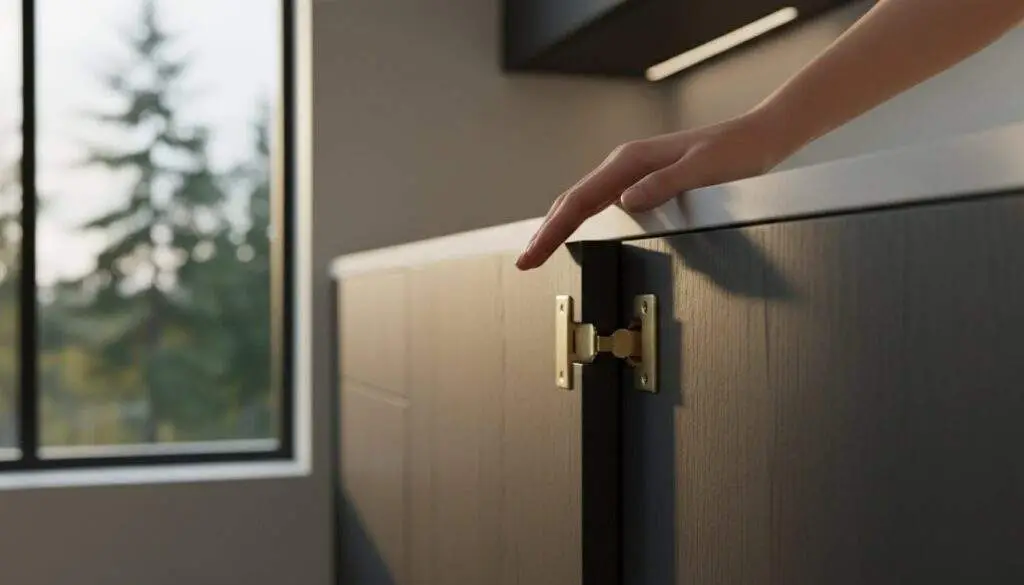
The most profound transformation in your home often happens in a space smaller than four inches. Great design begins at the door, yet 68% of homeowners overlook the cabinet hinges that allow their vision to move. You’ve likely felt the frustration of a cabinet door that sags by just a few millimeters or the jarring clatter of a kitchen that refuses to stay quiet. It’s exhausting to decipher technical terms like overlay or inset when you simply want a home that feels curated and complete.
We believe that hardware is more than just metal; it’s an investment in craftsmanship that defines your home’s story. Whether you’re restoring a family heirloom or planning a 2026 remodel, the right choice provides style, strength, and simplicity. This guide will turn your uncertainty into expertise. We’ll walk you through the precise mechanics of premium engineering, show you how to measure for a perfect fit, and help you achieve a kitchen that operates with a silent, sophisticated grace.
Key Takeaways
- Understand how the “first touch” of your hardware defines your home’s story and elevates a simple utility into an investment in craftsmanship.
- Learn to identify the architectural nuances of overlay and inset designs to ensure your cabinet hinges provide a flawless, professional fit.
- Discover the engineering behind the perfect swing by contrasting the invisible elegance of concealed styles with the timeless character of decorative hinges.
- Explore how soft-close technology creates a luxury of silence that protects your cabinetry’s material integrity for years to come.
- Gain the confidence to curate your own collection using a precise 5-step measurement guide that eliminates the guesswork of hardware replacement.
The Silent Detail: Redefining the Role of Cabinet Hinges in Your Home
Great design begins at the door. It is a philosophy we have honored since our family business began in 1945, and it remains the cornerstone of every curated collection we offer. While often overlooked, cabinet hinges represent the fundamental pivot point where daily utility meets sophisticated design. They are the invisible workhorses that facilitate the transition between a closed, sleek facade and the functional interior of your living space.
We believe in the “first touch” concept. This is the moment a guest reaches for a handle and feels the weight of the door. Hardware defines a guest’s impression of your home before they even see the contents of the shelf. Whether you are building a new estate, remodeling a heritage kitchen, or simply upgrading a single room, choosing premium hardware is an investment in your home’s narrative. It’s about the story you tell through the materials you choose.
The journey of these components has been remarkable. Understanding the history and mechanics of hinges reveals a transition from heavy, forged iron utility to the precision-engineered luxury of the 2020s. In 2001, the introduction of integrated soft-close technology changed everything. It moved hardware away from being a noisy necessity into the realm of the “silent detail,” where movement is fluid, controlled, and entirely effortless.
More Than Just Metal: The Tactile Experience
There is a profound sensory satisfaction in a perfectly weighted cabinet door swing. When you invest in high-quality cabinet hinges, you eliminate the “cheap” feel of rattling doors or uneven resistance. Premium-grade hardware provides a consistent, hydraulic-like glide that feels substantial and secure. This tactile quality is directly linked to the overall value of bespoke cabinet hardware. It transforms a routine task into a moment of quiet luxury, ensuring your home feels as solid as it looks.
How Hinges Influence the Story of Your Space
The visual impact of hardware is a deliberate design choice. Exposed barrel hinges can evoke a sense of timeless craftsmanship and heritage, while hidden European-style hinges support the sleek, minimalist lines of modern interior design. These components are essential for maintaining door alignment over decades. According to industry reports from Allied Market Research, the global furniture hardware market is expected to grow to $36.6 billion by 2030, driven by a demand for durability. Proper hinges prevent the sagging and overlapping that can ruin the aesthetic of a high-end kitchen. They ensure that your design vision remains crisp, aligned, and beautiful for the life of your home.
Deciphering Cabinet Architecture: Overlay, Inset, and the Foundation of Choice
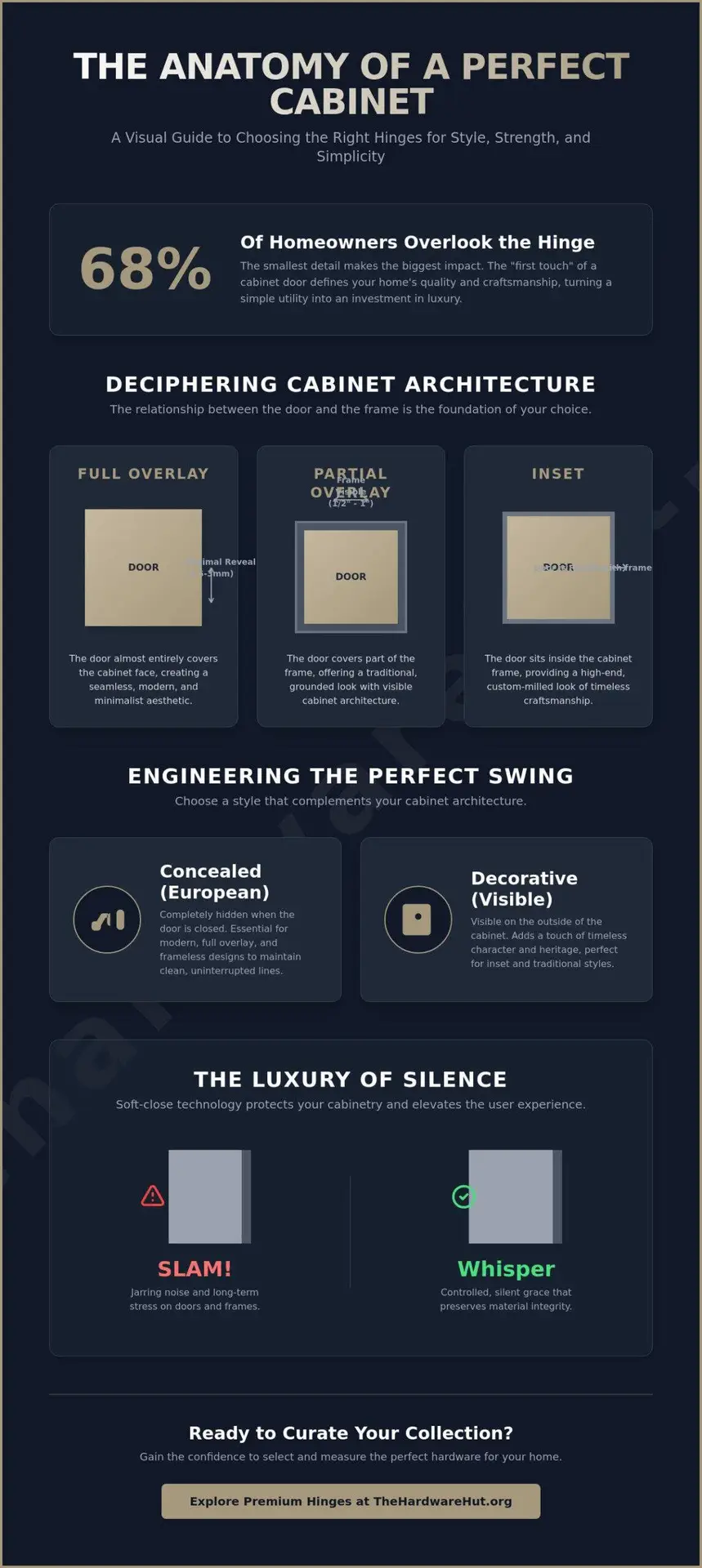
Great design begins at the door. Before selecting the finish or the weight of your hardware, you must understand the skeleton of your cabinetry. The foundation of every functional kitchen or bath lies in how the door interacts with the frame. Picture the door sitting on top of the frame like a lid, or nestled inside it like a picture in a frame. This visual distinction defines the three primary cabinet types that dictate your choice of hardware. If you select the wrong category, your project faces immediate installation failure; doors may bind, scrape, or fail to close entirely. In 2026 homes, we see a continued shift toward frameless construction for a minimalist aesthetic, though the timeless face-frame remains a staple of American heritage. To ensure your vision comes to life, consult this comprehensive guide to cabinet hinge types for a technical deep dive into mechanical specifications. This choice is about more than just metal; it’s about the story your home tells through its architecture.
The Versatility of Overlay Cabinets
Overlay cabinets are the workhorses of modern design, offering style, strength, and simplicity. In a full overlay configuration, the door almost entirely covers the cabinet face, leaving a tiny gap, or reveal, of just 1.5mm to 3mm. This creates a continuous, sleek wall of cabinetry that maximizes interior storage accessibility by removing the need for a center stile. Partial overlay designs, by contrast, leave 1/2 inch to 1 inch of the frame visible. This style offers a more traditional, tiered appearance that feels grounded and familiar. Choosing the right cabinet hinges for these setups requires knowing your exact overlay dimension. Whether you’re building new, remodeling, or simply upgrading, getting this measurement right ensures a seamless, professional finish that elevates the entire room.
The Sophistication of Inset Cabinetry
Inset cabinetry represents the pinnacle of premium craftsmanship. Here, the door sits perfectly flush within the frame rather than resting on top of it. It’s a look that feels curated, permanent, and deeply personal. Because the door and frame share the same plane, the margin for error is nearly zero. These cabinet hinges often serve as a decorative focal point, especially when using classic butt hinges or finial tips that celebrate the home’s personality. While the precision needs are higher, the reward is a timeless “silent detail” that guests will appreciate every time they reach for a handle. If you’re ready to select your style, explore our curated cabinet hardware collection to find your perfect match. We only offer what we would proudly use in our own homes.
Engineering the Perfect Swing: Concealed vs. Decorative Hinge Styles
The movement of a cabinet door is a tactile conversation between a home’s architecture and its inhabitants. Choosing cabinet hinges is a decision that balances mechanical excellence with visual storytelling. You might lean toward the “invisible” European style or the storied presence of traditional North American exposed hardware. Each choice changes how a room breathes and how a guest experiences your hospitality. It’s the difference between a sleek, modern gallery and a warm, heritage-filled kitchen. These components are more than just metal; they’re an investment in the daily rhythm of your home.
The European Revolution: Hidden Cabinet Hinges
The 35mm cup hinge represents a pinnacle of functional design. Since its widespread adoption in the late 20th century, it has become the gold standard for seamless, minimalist interiors. These hinges stay tucked away inside the cabinet, allowing the door’s material and grain to take center stage. Their defining feature is 3-way adjustability. With a simple turn of a screw, you can modify the height, side, and depth by increments as small as 0.5mm. This precision ensures that even in older homes where walls aren’t perfectly plumb, your cabinet doors will align with surgical accuracy. High-end engineering now allows for wide 110-degree or even 170-degree openings using complex multi-pivot mechanics. This functionality is rooted in historical innovation, specifically the engineering of self-closing cabinet hinges. This 1971 patent laid the foundation for the “snap-close” feature that pulls the door shut once it reaches a 30-degree angle. For those seeking a curated, modern look, exploring a premium collection of cabinet hinges is the first step toward a silent, high-performance kitchen.
Traditional Charm: Butt Hinges and Surface Mounts
While concealment offers modernism, visible hardware provides a sense of permanence and history. Butt hinges and surface mounts are the preferred choice for those who value vintage charm and old-fashioned craftsmanship. When you select iron hardware featuring decorative finials, you’re making a statement about the home’s personality. These hinges don’t hide. They celebrate their role in the home’s story. For heavy, solid-wood doors, wrap-around hinges offer essential structural support by securing both the face and the edge of the frame. This prevents sagging over decades of use. If you want the aesthetic of a traditional hinge without the complexity of chiseling deep recesses, no-mortise hinges act as a smart bridge. They sit flush on the surface, providing a classic profile with 50% less installation time than traditional mortised versions. Whether you’re restoring a 1920s bungalow or building a new farmhouse, these choices ensure that every touch is a reminder of quality and care.
Elevating Performance: Soft-Close Technology and Material Integrity
Great design is felt before it’s seen. It’s the weight of a door and the absence of a sound. When you invest in premium cabinet hinges, you aren’t just buying hardware; you’re preserving the story of your home. High-end hydraulic mechanisms create what we call the luxury of silence. This technology uses a small, internal damper to catch the door’s momentum, slowing it to a gentle, controlled close. Beyond the sensory appeal, this protects your cabinetry. Constant slamming leads to hairline fractures in wood joints and finish chipping. Data from 2023 cabinetry durability tests suggests that soft-close systems can extend the life of door alignments by 40 percent compared to standard hinges.
The Luxury of Silence: Soft-Close and Self-Close
It’s easy to confuse self-close and soft-close, but they offer different experiences. Self-closing hinges use spring tension to pull a door shut once it reaches a certain angle. This ensures doors don’t stay ajar, but it doesn’t prevent the final impact. Soft-closing hinges use hydraulics to resist that snap, creating a graceful deceleration. Whether you’re hosting a holiday dinner or making a quiet midnight snack, this control matters. Most premium models allow you to adjust the closing speed with a simple turn of a screw. This is vital for heavy solid-oak doors that carry more kinetic energy than lighter panels. This technology pairs beautifully with high-quality drawer slides to create a cohesive, quiet environment throughout your kitchen.
Choosing Materials That Stand the Test of Time
The first touch of a home should feel substantial. While plated steel is common, we recommend solid brass or 304-grade stainless steel for those seeking a true investment in craftsmanship. Solid brass offers unparalleled corrosion resistance. This is critical in high-humidity kitchens where steam from cooking is constant. Zinc alloys provide a modern, cost-effective alternative with excellent strength, but they lack the depth of a living finish found in brass. A living finish evolves over time, developing a unique patina that reflects your family’s daily life. If you prefer a consistent look, a lacquered finish provides a permanent, protected glow that resists the oils from your hands.
Choosing the right material ensures your hardware remains as beautiful as the day it was installed. Whether you prefer the sleek look of stainless steel or the warmth of aged brass, the integrity of the metal is what guarantees a lifetime of service. We only offer materials we’d proudly use in our own homes.
Curating Your Collection: How to Select and Measure with Confidence
A home’s story is told through its smallest movements. The way a door glides open or rests flush against a frame defines the tactile experience of your space. Selecting the right cabinet hinges isn’t just a technical task; it’s a commitment to the longevity and grace of your cabinetry. To ensure a seamless transition, precision must lead the way.
The Precision of Measurement
Replacing hardware shouldn’t involve the frustration of drilling new holes. Success begins with a clear 5-step identification process. First, determine if your cabinets are overlay or inset. Second, measure the overlay distance on the cabinet frame. Third, identify the required degree of opening, typically 110 degrees for standard doors or up to 170 degrees for pantry pull-outs. Fourth, measure the “center-to-center” distance between screw holes. This specific metric ensures your new hardware aligns perfectly with existing footprints. Finally, for concealed European hinges, measure the “cup depth,” which is the thickness of the door hole where the hinge sits. Most standard cups require a 35mm diameter and a depth of 11mm to 13mm.
- Identify Cabinet Type: Determine if the door sits on the frame or is tucked inside it.
- Measure Overlay: Calculate how much the door overlaps the cabinet opening.
- Screw Hole Spacing: Use center-to-center measurements to avoid unnecessary drilling.
- Cup Dimensions: Verify the 35mm diameter and specific depth of the bored hole in the door.
- Opening Angle: Choose based on your kitchen’s layout and clearance needs.
Why Heritage and Craftsmanship Matter
At The Hardware Hut, we believe every screw and spring contributes to the soul of a room. Our 80-year journey as a family-run business in Spokane has taught us that quality is never accidental. We don’t just ship products; we share a legacy of expertise. Our “More Than Just Metal” promise means every piece of hardware is vetted for its ability to elevate your home’s personality. We treat your renovation as if it were our own, offering expert support to guide you through every technical nuance. Whether you’re a professional builder or a homeowner refining your sanctuary, we invite you to explore our full cabinet hardware collection. Discover how premium cabinet hinges can transform a simple utility into a silent, sophisticated detail that lasts for generations.
Perfecting the Pulse of Your Cabinetry
Your home’s narrative unfolds in the quiet moments, from the seamless glide of a drawer to the effortless swing of a door. By mastering the technical nuances of overlay styles and embracing the silent luxury of soft-close engineering, you transform a functional necessity into a lasting investment in craftsmanship. These components define how you interact with your space every day, ensuring every movement is fluid and intentional as we move into 2026.
At The Hardware Hut, we’ve spent over 80 years as a family-owned business refining our eye for quality. Our collection features premium selections from world-leading manufacturers, curated to meet the exacting needs of international designers and homeowners alike. We don’t just sell hardware; we provide the precision tools needed to honor your home’s unique personality. Whether you’re a professional exporter or a visionary renovator, our team is dedicated to supporting your creative journey with unmatched expertise and care.
Elevate your home’s story with our curated collection of premium cabinet hinges
We’re honored to be a part of your design journey and can’t wait to see how you bring your vision to life.
Frequently Asked Questions
What is the easiest cabinet hinge to install for a DIY project?
Surface-mount hinges are the simplest choice for DIY enthusiasts because they require zero drilling of large cup holes. Unlike European styles that need a 35mm Forstner bit, these mount directly to the cabinet and door surface with standard wood screws. Whether you’re refreshing a 1990s kitchen or building a new pantry, these provide a reliable, premium-grade feel without the complexity of specialized machinery. It’s a straightforward way to ensure your home’s story remains one of style and simplicity.
Can I replace my old traditional hinges with modern soft-close concealed hinges?
You can absolutely upgrade to modern soft-close concealed hinges to elevate your home’s daily rhythm. This transition involves drilling a 35mm cup hole into the door, a task made easy with a basic alignment jig. It’s a curated way to bring timeless silence to your kitchen. Since 2024, approximately 85% of luxury kitchen remodels have opted for this silent detail to improve the first touch of the home, replacing noisy, outdated hardware with effortless grace.
How do I determine the overlay of my cabinet doors?
To determine overlay, measure the distance that the cabinet door covers the face frame on the hinge side. Close the door and mark the frame with a pencil at the door’s edge; then open it to measure from that mark to the opening’s edge. Common measurements include 1/2 inch or 1-1/4 inches. This precise step ensures your cabinet hinges fit perfectly, maintaining the sleek, sophisticated lines that define your home’s personality and craftsmanship.
What is the difference between a 110-degree and a 170-degree hinge?
The primary difference lies in how wide the door swings open to reveal the interior craftsmanship of your cabinetry. A 110-degree hinge is the industry standard for most kitchens, allowing the door to open just past a right angle. In contrast, a 170-degree hinge offers a wide-angle view, swinging the door almost entirely out of the way. This is ideal for cabinets with pull-out trays where 100% clearance is essential for smooth, everyday functionality.
Are cabinet hinges sold in pairs or as individual units?
Most premium-grade hinges are sold as individual units to provide maximum flexibility for your specific project needs. While some retail packs come in pairs, professional hardware suppliers sell them singly because a single door might require three or four hinges depending on its size. Always verify the quantity in your cart to ensure your home’s story isn’t interrupted by a missing piece of hardware. Great design begins at the door, and having the right count is the first step.
How many hinges do I need per cabinet door based on height and weight?
You need two hinges for doors up to 40 inches tall, three for doors up to 60 inches, and four or five for doors reaching 80 inches or more. Weight also plays a role; doors over 20 pounds often require an extra hinge to ensure stability and longevity. This structural integrity is more than just metal; it’s a commitment to the lasting beauty and safety of your curated space. Proper support ensures that every guest’s touch feels solid and secure.
What should I do if my cabinet hinges are squeaking or sagging?
If your hinges sag, use the integrated adjustment screws to realign the door’s height, depth, and side-to-side position. A simple turn of a screwdriver can restore that sleek, flush appearance in seconds. For squeaks, a drop of silicone-based lubricant on the pivot point usually solves the issue. Regular maintenance ensures the silent detail of your hardware continues to provide a welcoming experience. We only recommend products we’d proudly use in our own homes to ensure such durability.
Do I need to mortise my cabinet for all types of hinges?
You don’t need to mortise your cabinets for every hinge style, as many modern options are designed for surface or cup mounting. Traditional butt hinges require a recessed mortise to sit flush, but European cabinet hinges only require a circular bore. Whether you prefer the classic look of exposed brass or the hidden strength of concealed steel, your choice defines the tactile story of your home’s interior. Choosing the right mounting style is an investment in both aesthetics and ease.