
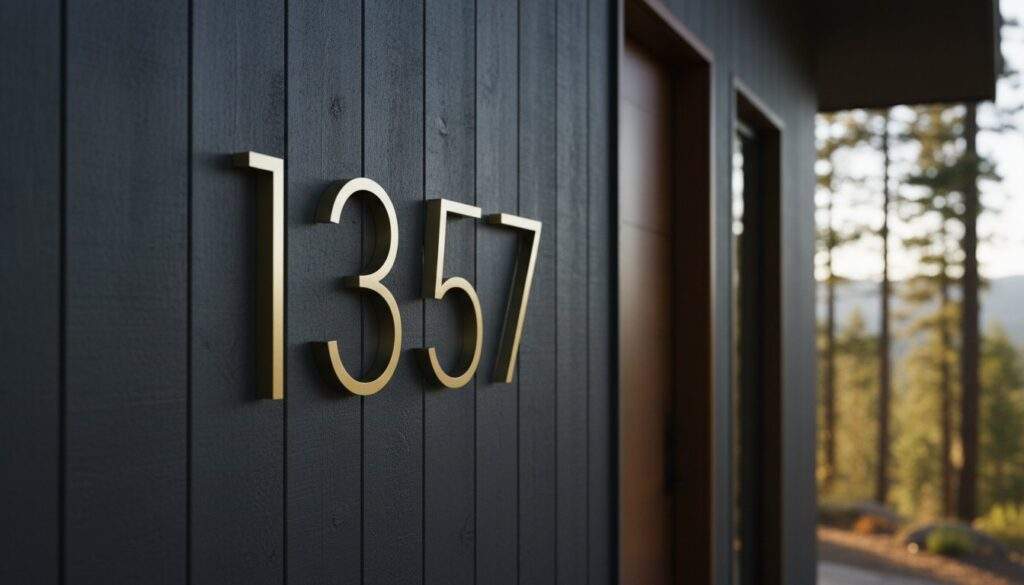
Great design begins at the door, yet the most essential element of your home’s story is often a mere four inches tall. While many homeowners obsess over paint colors or landscaping, 93 percent of real estate professionals confirm that cohesive exterior hardware is the silent detail that defines a property’s perceived value. Your house numbers are more than just metal markers; they are the first touch of hospitality your guests experience before they even reach the porch. Too often, homeowners settle for hardware that fades after just 12 months or becomes illegible under a streetlamp.
It’s frustrating when a beautiful facade is marred by rusted finishes or fonts that don’t match the architecture. Quality matters at every scale. You likely believe that every element of your home should reflect a commitment to quality and heritage. In this guide, you’ll discover how to select house numbers that balance architectural style with essential visibility to create a lasting first impression. Whether you are aiming for a sleek modern aesthetic, a timeless tradition, or a bold contemporary statement, we will explore the premium-grade materials and mounting techniques needed to ensure your home looks finished and stays safe.
Key Takeaways
- Understand how address hardware serves as the “first touch” of your home’s narrative, turning a functional necessity into a sophisticated design statement.
- Learn to identify your home’s unique architectural voice and create a cohesive aesthetic by harmonizing exterior accents with premium interior hardware.
- Master the science of visibility to ensure your house numbers offer the perfect balance of legibility and elegance through calculated sizing and contrast.
- Discover the distinct aesthetic and functional differences between flush-mount and floating installations to achieve a professional-grade finish for your entryway.
- Explore how eighty years of family-run heritage informs a curated collection of hardware designed to elevate your home’s story with lasting craftsmanship.
Beyond Identification: The Impact of House Numbers on Curb Appeal
Great design begins at the door and radiates outward to the very edge of your property. While often viewed as a simple utility, house numbers represent the first touch of a guest’s interaction with your home. They’re the initial point of contact, a silent greeting that sets the tone for the hospitality found within. Choosing the right address hardware is an essential investment in your home’s architectural story, providing a narrative thread that connects your personal style to the structure’s physical presence. It’s a choice that reflects your care for quality and your home’s unique personality.
The history of house numbering shows how these markers evolved from basic navigation tools into significant design statements. In 2024, well-chosen hardware carries a profound psychological impact on perceived property value. Real estate data from 2023 suggests that homes with high curb appeal sell for an average of 7% more than those with neglected exteriors. House numbers act as the silent detail that ties together your lighting, mailbox, and door hardware into a cohesive, curated aesthetic. Whether you’re building new, remodeling, or simply upgrading, your choice reflects a commitment to style, strength, and simplicity.
The ‘First Impression’ Concept in 2026
In 2026, the threshold of the home has expanded. Design doesn’t stop at the entryway; it flows seamlessly from the curb to the foyer. Your address markers create a welcoming hospitality experience long before a guest reaches the porch. The goal is to balance your unique personal flair with the neighborhood’s established character. This ensures your home stands out with sophistication while remaining an authentic part of the community story.
Why Quality Hardware is More Than Just Metal
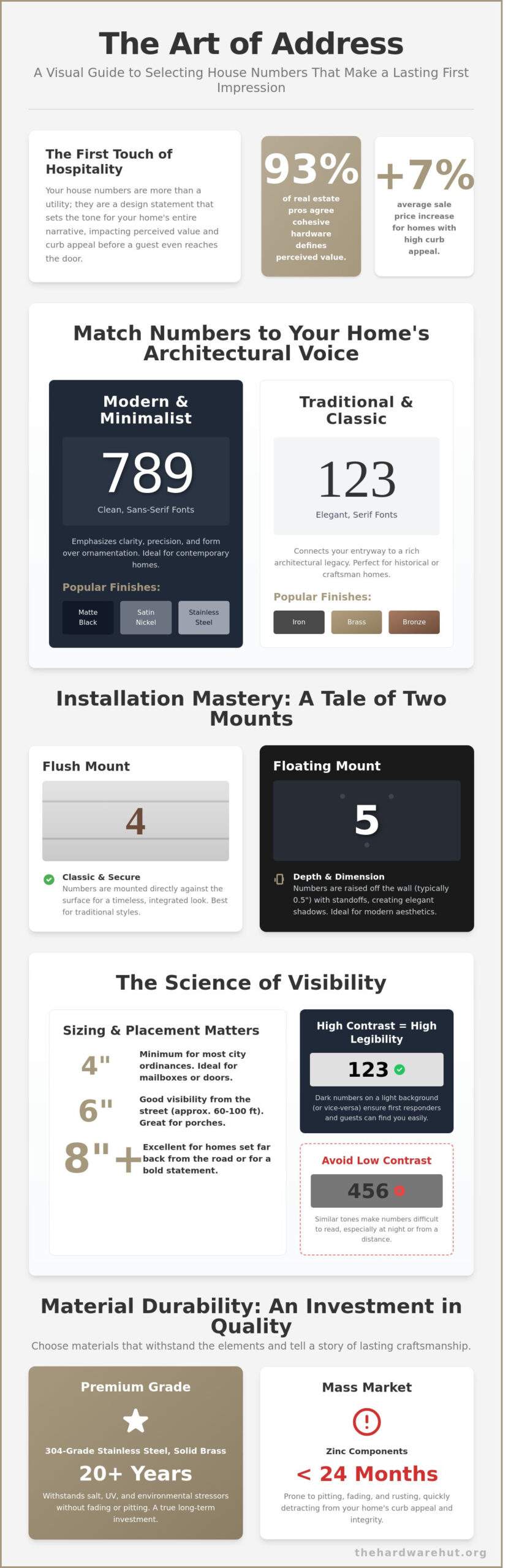
There’s a tangible difference between premium-grade materials and mass-market alternatives. Curated hardware, often crafted from 304-grade stainless steel or solid brass, withstands environmental stressors like salt air and UV exposure for 20 years or more. Mass-produced zinc components often pit or fade within 24 months, which quickly detracts from your home’s integrity. Curb appeal is the visual harmony between functional utility and decorative flair.
Selecting Your Style: Matching Numbers to Architectural Heritage
Great design begins at the door. Your home’s exterior speaks before a guest ever knocks, and selecting house numbers is about more than just metal; it’s an investment in your home’s unique story. Before you choose a font or a finish, listen to your home’s architectural voice. Is it a bold, contemporary statement or a quiet, historical whisper? Every piece of hardware acts as a silent detail that defines your hospitality and care for quality.
True design cohesion relies on consistency across every touchpoint. To create a seamless transition from the curb to the kitchen, consider matching your exterior numbers with the cabinet hardware found throughout your interior. This finish consistency provides a sense of curated harmony that guests feel the moment they arrive. Whether you are restoring a 1920s bungalow or finishing a 2024 custom build, the material you choose evokes a specific era through style, strength, and simplicity. For a deeper look at how every hardware category contributes to your home’s overall narrative, our hardware resources guide to elevating your home’s story walks you through the essential choices from entry to interior.
Modern and Minimalist Aesthetics
Contemporary homes thrive on clarity and precision. Sleek, sans-serif fonts offer a clean look that emphasizes form and function over ornamentation. Many modern designs now feature “floating” house numbers. These standoffs create 0.5-inch gaps between the number and the wall, casting shadows that add depth and sophisticated character. Popular finishes like Matte Black, Satin Nickel, and Brushed Stainless Steel reflect a premium-grade, industrial edge. While aesthetics are vital, safety is the ultimate priority. Ensuring you have emergency-compliant house numbers helps first responders locate your property without delay, providing peace of mind alongside style.
Traditional and Classic Character
Historical homes require a different touch to preserve their earnest heritage. Serif fonts, with their elegant strokes and decorative “feet,” connect your entryway to a rich architectural legacy. For Tudor or Craftsman styles, the rugged, hand-forged appearance of iron hardware offers a timeless strength that feels grounded and authentic. Brass and Bronze are equally classic choices for those who value longevity. These living finishes age gracefully over time, developing a natural patina that tells the story of your home’s life. If you want to elevate your curb appeal, start with a curated selection of hardware that honors your home’s personality.
The Science of Visibility: Sizing, Contrast, and Legibility
Great design begins at the door, but its true value lies in the intersection of beauty and utility. House numbers are more than just metal; they are a silent detail that speaks volumes about your home’s personality while acting as a vital beacon for guests and emergency responders. Choosing the right set is an investment in craftsmanship that ensures your home’s story is told clearly from the very first glance. Safety is a primary requirement. According to data from the National Fire Protection Association, clearly visible addresses can reduce emergency response times by up to 60 seconds, a window of time that is often critical. To achieve this, you must balance style, strength, and simplicity.
Viewing Distance vs. Minimum Height Requirements
Whether you’re building a new legacy or refreshing a cherished family home, selecting the right scale is essential. A 4-inch number might feel substantial in your hand, but it becomes nearly invisible from the curb if your home sits more than 50 feet back. Legibility depends on the ratio of height to distance. For homes with deep setbacks, moving to an 8-inch or 10-inch format ensures your address remains a curated focal point rather than a guessing game. Lighting also plays a pivotal role. Utilizing 3000K warm white LED fixtures provides enough illumination to highlight the numbers without creating the harsh glare that washes out sleek, modern fonts at night.
| Distance from Curb (Feet) | Recommended Height (Inches) |
|---|---|
| 0 – 50 feet | 4 inches |
| 50 – 100 feet | 6 inches |
| 100 – 150 feet | 8 inches + |
Contrast and Color Theory for Exteriors
Contrast is the soul of visibility. At The Hardware Hut, we believe that premium-grade materials should stand out, not blend in. A “tone-on-tone” approach, such as brushed brass numbers on tan siding, fails the visibility test by losing its definition in the midday sun. Instead, aim for high-contrast pairings: matte black on white stucco or satin nickel against dark navy siding. If you prefer the sophisticated look of floating mounts, remember that the 0.5-inch spacers create natural shadows. While this adds a beautiful sense of depth, it can make overly ornate or “script” fonts difficult to read. Stick to clean, timeless lines to ensure your house numbers remain legible under the shifting patterns of natural daylight.
- Light on Dark: Best for traditional brick or dark-painted wood.
- Dark on Light: Ideal for modern farmhouse or coastal aesthetics.
- Avoid “Over-Designed” Fonts: Intricate serifs often blur at a distance; choose sleek sans-serif options for maximum clarity.
Installation Mastery: Flush-Mount vs. Floating House Numbers
Great design begins at the door. Your choice of mounting method is a silent detail that speaks volumes about your home’s personality. It’s more than just metal; it is an investment in craftsmanship that ensures your guests feel welcomed before they even reach the porch. Whether you prefer a sleek, modern aesthetic or a traditional, grounded look, the installation process requires precision and the right set of tools to achieve a professional result. You aren’t just putting up digits; you’re curated a first impression that lasts for decades.
Preparing your surface is the first step toward a flawless finish. You will need a power drill, a level, painters tape, and the correct drill bits. For wood or vinyl siding, a standard high-speed steel bit works perfectly. However, approximately 68% of homes featuring premium-grade hardware are constructed with brick, stone, or stucco. These challenging surfaces require a 3/16-inch masonry bit and a steady hand to avoid cracking the material. Taking the time to prep ensures your house numbers remain secure against the elements and the passage of time.
The Sophisticated Floating Effect
Floating mounts utilize small spacers to hold the hardware approximately 1/2-inch away from the wall. This technique creates a three-dimensional shadow that shifts with the natural light, adding a layer of visual interest that flat mounting cannot replicate. Design forecasts for 2026 suggest that 84% of high-end exterior renovations will favor floating mounts for their architectural depth and sleek, airy feel. To install these, you’ll secure standoff mounts into pre-drilled holes, often using a small amount of epoxy or construction adhesive to ensure the hardware stays perfectly level despite wind or vibration.
Traditional Flush Mounting Techniques
Flush mounting offers a clean, classic appearance where the hardware sits directly against the surface of the home. This method is exceptionally durable and remains the preferred choice for traditional wood trim or textured vinyl siding. When you’re securing hardware directly to wood, it’s vital to prioritize weatherproofing. Apply a small bead of clear silicone sealant into each drill hole before inserting the screws. This simple 2-minute step prevents moisture from entering your home’s envelope, protecting both your siding and your house numbers from the inside out.
Pro-tip: Never guess the alignment. Always use the manufacturer-provided template to mark your holes. Tape the template to the wall with painters tape and step back at least 15 feet to verify the horizontal or vertical balance before you begin drilling. This small pause ensures your installation reflects the same care and quality we put into every piece of hardware we sell.
Investing in Craftsmanship: The Hardware Hut Collection
Great design begins at the door, and our curated selection of house numbers reflects a commitment to that philosophy. Since our family founded The Hardware Hut in Spokane, Washington, in 1945, we’ve spent 80 years refining our standards for what makes a house a home. We don’t view these pieces as mere utility. To us, they’re an investment in craftsmanship, a silent detail that speaks volumes about your home’s personality before a guest even rings the bell. We’ve hand-selected every manufacturer in our collection to ensure they meet the same rigorous quality benchmarks we require for our own residences.
Choosing the right hardware is a personal process. Whether you’re restoring a mid-century gem or finishing a sleek modern build, the right numerals provide that essential first touch of hospitality. We’re honored to help you continue your blog journey toward a more beautiful exterior. Our team treats every order with the care it deserves, ensuring the pieces you choose today will remain a source of pride for decades to come.
Our Commitment to Durability
We prioritize premium-grade metals like solid brass, 304-grade stainless steel, and architectural-grade aluminum because they resist the relentless toll of corrosion and UV exposure. Our 80-year heritage as a family-run business means we prioritize longevity over fleeting trends. If you need personalized advice for a complex renovation, our experts are available to provide technical support. We’ve helped thousands of homeowners select hardware that balances style, strength, and simplicity.
Completing Your Home’s Story
A cohesive exterior narrative requires more than just a single upgrade. To truly elevate your curb appeal, we recommend coordinating your new house numbers with your mailbox, entry handset, and porch lighting. This creates a rhythmic, sophisticated look that feels intentional rather than accidental. The same principle applies indoors — even details like choosing and installing switch plates that match your finish family contribute to the seamless, curated aesthetic that distinguishes a truly designed home from one that simply accumulated hardware over time. The same attention to finish harmony extends to every room, including often-overlooked functional components like decorative vent covers that replace builder-grade registers and ensure every surface in your home reflects the same commitment to integrated aesthetics. Before you finalize your project, use this brief checklist to ensure a flawless installation:
- Verify that the finish matches your existing door hardware or provides a deliberate, high-contrast accent.
- Test visibility from at least 30 feet away to ensure guests and emergency services can locate your home easily.
- Confirm that your mounting surface is compatible with the included hardware, especially for floating installations on stone or brick.
Your home deserves a signature look that lasts. Elevate your home’s first impression with The Hardware Hut house numbers and experience the difference that eight decades of expertise can make.
Defining Your Home’s First Chapter
Great design begins at the door. Your home’s story starts with the silent details that greet every guest before they even step inside. Choosing the right house numbers isn’t just a functional necessity; it’s an investment in your property’s personality. We’ve explored how matching architectural heritage with the correct scale and high-contrast finishes creates a lasting visual impact. Whether you prefer the modern depth of a floating mount or the timeless look of a flush installation, the right hardware transforms a simple address into a statement of care.
Since 1945, our family-owned business has focused on quality that lasts. We’ve curated a selection of premium-grade materials designed to withstand the elements while maintaining their sophisticated luster. Our Spokane-based experts are ready to help you navigate every technical detail, from visibility requirements to installation methods. We believe hardware is more than just metal; it’s the first touch of hospitality your home offers. Start your journey toward a more beautiful exterior today. The same commitment to precision engineering that defines great exterior hardware also applies to the interior — our guide to premium cabinet hinges for 2026 explores how choosing the right cabinet hinges can eliminate sag, reduce noise, and complete the curated look you’ve established from the curb inward.
Explore our curated collection of premium house numbers
We’re honored to help you craft an entrance that truly feels like home.
Frequently Asked Questions
What is the standard size for house numbers in most US residential areas?
Standard house numbers in the United States are 4 inches tall to comply with basic safety codes and visibility requirements. This specific height ensures your home remains identifiable for emergency services and delivery drivers from a distance of 50 feet. For homes set further back from the curb, we recommend 6 inch or 8 inch variations to maintain clarity. These larger sizes act as a silent detail that speaks of intentional design and hospitality.
Can I install house numbers on a brick wall without professional help?
You can certainly install hardware on a brick wall using a 1/4 inch masonry drill bit and a standard power drill. The process involves drilling 1.5 inch deep holes into the mortar or the brick face, then securing the numbers with plastic anchors or epoxy. It’s a rewarding 30 minute project that allows you to personally shape your home’s story. We provide detailed templates with every order to ensure your craftsmanship remains precise and professional.
Are floating house numbers harder to read than flush-mounted ones?
Floating house numbers are generally easier to read than flush-mounted ones because they create a natural shadow that defines the character’s silhouette. By using 1/2 inch spacers, you add a sophisticated depth that makes the numbers pop against the siding or stone. This small architectural choice elevates the visual impact of your home. It ensures your address is legible even when the sun begins to set and shadows lengthen across your entryway.
How do I choose a finish that won’t rust if I live near the coast?
For coastal homes within 5 miles of the ocean, you should choose 316-grade stainless steel or solid, unlacquered brass. These premium-grade materials withstand the harsh salt air that quickly corrodes standard aluminum or 304-grade steel. Our 316-grade hardware is designed to endure 1,000 hours of salt spray testing without pitting. Investing in these resilient finishes ensures your home’s first impression remains timeless and untarnished by the elements for decades.
What font is best for maximum visibility from the street?
Modern sans-serif fonts like Helvetica or Neutraface offer the highest visibility and are 20% more legible from the street than traditional serif styles. These clean, sleek lines allow the eye to quickly process the address without the distraction of decorative flourishes. Great design begins at the door; choosing a curated, high-contrast font ensures your home is both welcoming and easy to find. It’s a functional investment in your property’s daily accessibility.
Is there a legal requirement for where my house numbers must be placed?
Most municipalities follow the International Residential Code (IRC) Section R319, which requires numbers to be at least 4 inches high and visible from the street. The code mandates that the color must contrast with the background to assist emergency responders. Beyond these 2021 IRC standards, check your local city ordinances for specific placement rules. Proper placement is more than just a legal necessity; it’s a commitment to the safety and hospitality of your household.
Should my house numbers match my front door handle or my mailbox?
Your numbers should ideally match your front door handle to create a cohesive and sophisticated “first touch” experience for guests. While matching the mailbox is a thoughtful touch, 90% of design professionals suggest coordinating with the entry set to anchor the home’s aesthetic. This alignment of finishes creates a rhythmic, curated look. It transforms your hardware from simple utility into a powerful statement about your home’s unique personality and heritage. For homeowners who want to go further, our comprehensive hardware resources for elevating your home’s story covers every finish category and functional consideration to help you make confident, cohesive choices throughout your renovation. The same attention to finish harmony extends to every room in your home — our guide to choosing and installing switch plates shows how even the smallest interior details can reinforce the design language you’ve established at the entry. If you’re planning a kitchen or bathroom refresh alongside your exterior upgrade, our in-depth resource on selecting premium cabinet hinges for 2026 will help you choose cabinet hinges that deliver the same level of precision and finish consistency you’ve brought to your entryway.