
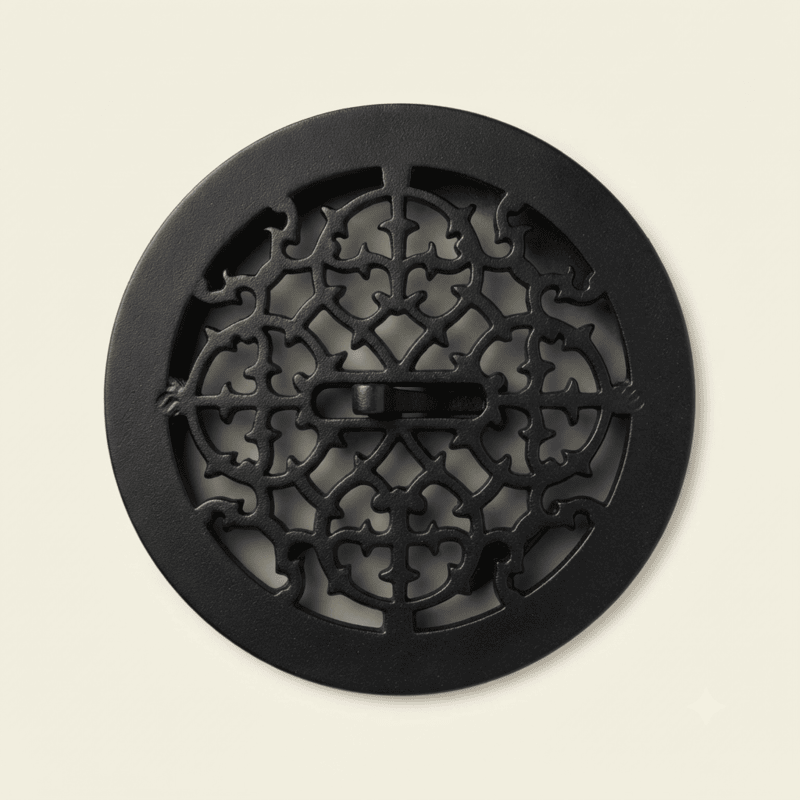
A floor register is an essential heating, ventilation, and air conditioning (HVAC) component installed flush or surface-mounted directly onto flooring. It serves as the terminal interface between a home’s ductwork and its living spaces, acting as both a protective cover and an active regulator for indoor climate control.
Core Functions & Anatomy
Unlike basic passive vent covers or grilles, a floor register features an adjustable built-in damper system (usually controlled by a sliding lever or thumb wheel).
-
Airflow Regulation: The damper opens or closes to control the volume of conditioned air entering a room.
-
Directional Control: Multi-directional louvers or vanes help spread air outward across the floor space rather than letting it blow straight up in a narrow column.
-
Debris Protection: The upper grille prevents large objects, dust, and trash from falling directly down into the main HVAC ductwork.
Common Types of Floor Registers
-
Drop-In (Self-Rimming) Registers: The most common variety. They feature a raised outer lip that sits directly on top of the finished floor, covering the cut duct opening easily during retrofits.
-
Flush-Mount Registers: Engineered to sit completely level with hardwood or tile flooring. They require professional installation during the flooring construction phase to achieve a seamless, high-end, and trip-free finish.
-
Decorative / Designer Registers: Built with intricate metalwork, scroll patterns, or specialized finishes (such as antique brass, oil-rubbed bronze, or matte black) to complement interior design.
Materials & Durability
Floor registers must withstand regular foot traffic, furniture weight, and environmental stressors:
-
Steel & Cast Iron: Incredibly strong and rigid, making them ideal for high-traffic hallways and living areas. Cast iron provides a heavy, vintage aesthetic well-suited for historic homes.
-
Aluminum: Lightweight and naturally rust-resistant, making it a prime option for moisture-prone areas like kitchens and bathrooms.
-
Wood: Crafted from species like oak, maple, or cherry to match natural hardwood floors seamlessly.
-
Plastic (ABS Polymer): Budget-friendly and impervious to rust, often used in basements or high-humidity zones.
Placement & HVAC Efficiency
In forced-air heating setups, floor registers are frequently placed beneath windows or along exterior walls to combat incoming cold drafts. Because warm air naturally rises, floor placement maximizes heating efficiency during winter months.
However, maintaining clear space around them is vital. Obstructing a floor register with heavy furniture, thick rugs, or pet beds restricts airflow, forces the HVAC blower to work harder, and spikes monthly energy bills. Routine cleaning—such as vacuuming trapped dust and pet hair out of the damper chamber—is also necessary to protect indoor air quality and maintain system performance.


Reviews
There are no reviews yet.