
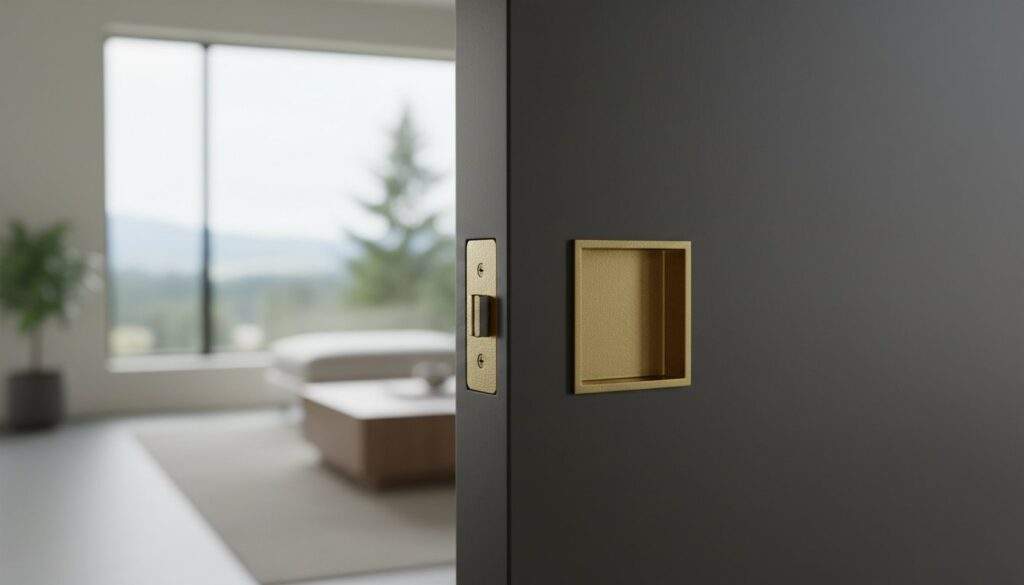
What if the most profound design choice in your home is the one your guests never actually see? At The Hardware Hut, we believe that great design begins at the door, specifically within the silent, sophisticated pocket door hardware that allows a room to breathe. We understand that you seek more than just metal; you want an investment in craftsmanship that eliminates the headache of doors jumping off tracks or the jarring sound of a noisy glide. You deserve a home where every transition feels intentional, curated, and effortlessly smooth.
Whether you’re building a new heritage estate or refining a modern loft in 2026, the right hardware is the secret to elevating both space and style. We promise to help you move past the confusion of wall thickness requirements and the disappointment of cheap plastic pulls. This guide explores the precision engineering of premium-grade tracks, the tactile beauty of solid finishes, and the structural secrets that ensure your architectural “silent details” remain flawless for the next thirty years of your home’s story.
Key Takeaways
- Discover how a “silent detail” in design can elevate your home’s flow, transforming a functional necessity into a sophisticated architectural statement.
- Learn the critical differences between contractor-grade and premium pocket door hardware to ensure a smooth, lasting “disappearing act” for your home’s transitions.
- Explore the tactile world of pulls and finishes to select the “jewelry” that defines your home’s personality and creates a lasting first impression.
- Master the technical requirements of wall stud measurements and weight capacities to guarantee a precision fit within your home’s unique architecture.
- Realize why choosing expert-vetted craftsmanship is an investment in your home’s story, backed by a family heritage of quality and care.
The Silent Architecture of Space: Why Pocket Door Hardware Matters
Great design begins at the door. It’s the first point of contact between a guest and your home’s personality, yet the most sophisticated elements are often those you never see. Pocket door hardware serves as the invisible engine of the modern interior, providing the grace, strength, and silence required for a home to function beautifully. We call this the silent detail. It’s the hidden craftsmanship that allows a heavy slab of wood to glide with the touch of a single finger, transforming a room’s flow without ever demanding attention.
The 2026 design landscape is defined by the concept of flexible living. Homeowners now demand spaces that adapt to their immediate needs, where rooms can merge or divide in an instant. This “first touch” philosophy is central to our curation. The tactile weight of a flush pull or the smooth, dampened click of a privacy latch tells a story of quality and care. Whether you’re building a new legacy home or refining a cherished family space, the hardware you choose is an investment in daily comfort.
Maximizing Your Home’s Footprint
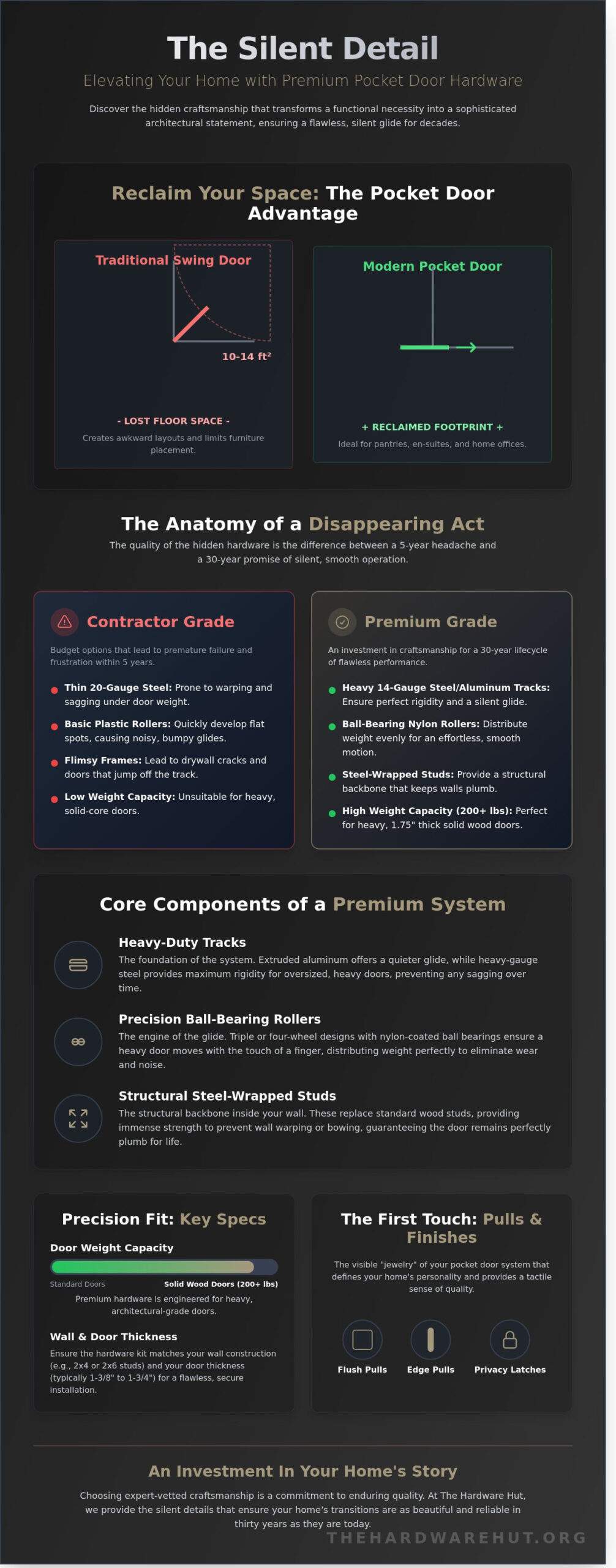
Space is a luxury, and traditional swing doors are often its greatest thieves. Consider the math of a standard interior door. A single swing requires between 10 and 14 square feet of floor space to operate. In a 150-square-foot home office or a master en-suite, that’s a significant portion of your usable footprint lost to a radius of empty air. Pocket doors eliminate this conflict entirely. They are the premier choice for several key areas:
- Gourmet Pantries: They allow for easy access during meal prep without blocking narrow kitchen walkways.
- Compact En-suites: They create a spa-like entrance that doesn’t interfere with vanities or towel bars.
- Integrated Offices: They open the workspace to the home during the day and seal it for quiet focus at night.
There’s a psychological shift when a door disappears into the wall. It removes the visual noise of a protruding panel, making a home feel expansive, welcoming, and unburdened.
The Evolution of the Disappearing Door
Our journey at Spokane Hardware Supply began 80 years ago; we’ve watched the pocket door evolve from a mid-century novelty into a luxury standard. Older systems were often plagued by wobbly tracks and frustrating jams, but 2026 engineering has solved these legacy issues. Modern premium-grade materials, such as ball-bearing nylon rollers and rigid steel-wrapped studs, ensure the door remains plumb and silent for decades. What was once a mere utility is now a curated design statement. Our heritage is built on the belief that hardware is more than just metal; it’s a promise of durability and timeless style that we would proudly use in our own homes. You can explore more about these design shifts in our curated design blog.
The Anatomy of a Disappearing Act: Tracks, Rollers, and Frames
Great design begins at the door, but for a pocket door, the most vital artistry remains hidden from view. While the decorative pull provides the first touch for a guest, the internal pocket door hardware acts as the silent detail that defines the room’s character. Whether you are building a new heritage estate or refining a modern urban loft, the internal kit is more than just metal; it is an investment in the daily rhythm of your home. In 2026, builders are moving away from flimsy contractor-grade kits that rely on thin 20-gauge steel and plastic components. These budget options often lead to “ghosting” doors or track jumping within five years. Instead, premium-grade systems offer the strength, silence, and stability required for heavy, 1.75-inch thick solid wood doors that weigh upwards of 200 pounds.
Investing in high-quality internal hardware is far more critical than the visible trim. A beautiful handle cannot compensate for a warped track or a sagging frame. The pocket frame serves as the structural backbone of your wall, replacing traditional studs. A premium steel-wrapped wood stud or a full aluminum cage ensures the wall remains perfectly plumb over a 25-year lifecycle, preventing the drywall cracks that plagued older installations. You can explore more about technical specifications and installation standards in our curated collection of design guides.
Track Systems and Roller Technology
The choice between aluminum and steel tracks often dictates the acoustic signature of your home. Heavy-duty 14-gauge steel tracks provide the rigidity needed for oversized doors, while extruded aluminum tracks offer a sleeker, quieter glide that dampens the sound of movement. The science of the glide rests on ball-bearing rollers. Unlike basic nylon wheels that flat-spot over time, triple-wheel or four-wheel designs distribute weight evenly across the track. This prevents the door from rocking and ensures it stays seated, even if a child operates it with a heavy hand. The longevity of a pocket door is written in the steel of its track and the precision of its bearings.
The Magic of Soft-Close and Soft-Open
For the 2026 luxury home, soft-close technology is no longer an upgrade; it is a standard expectation for nurseries, master suites, and quiet libraries. These systems utilize hydraulic dampeners to catch the door in the final 2 inches of travel, gently pulling it into the fully open or fully closed position. This eliminates the jarring “thud” of a door hitting the stud and protects delicate fingers from being pinched. When installing these systems, calibration is the key to success. A dampener rated for a 100-pound door will feel stiff on a lighter 50-pound door, while a heavy 250-pound slab will overwhelm a standard-duty actuator. Always match the hydraulic resistance to the specific weight of your door slab to ensure a movement that feels effortless and sophisticated.
Form Meets Function: Choosing Pulls, Latches, and Finishes
Great design begins at the door. It’s the silent detail that defines a room’s character. While the track system provides the movement, the pocket door hardware you touch every day provides the soul. We believe hardware is more than just metal; it’s the handshake of your home. This “first touch” sets the tone for the entire interior experience and reflects your home’s personality.
Tactile quality is a priority for 2026 homeowners. A flush pull offers a sleek, recessed profile that disappears into the door’s face, while edge pulls provide a discreet finger grip on the door’s leading edge. Ring pulls add a vintage, artisanal flair that feels heritage-focused. The “heft” of a premium-grade pull matters. A solid brass pull weighing 12 ounces feels more substantial and permanent than a thin, 2-ounce alternative. You want your home to feel like an investment in craftsmanship, not just a collection of parts.
Consistency creates a calm environment. We often suggest coordinating your door pulls with your cabinet hardware to create a unified visual story. Whether you’re building a new estate or refreshing a single room, matching the metal’s weight and profile across different surfaces ensures a curated, professional look. It’s about the small, intentional choices that make a space feel complete.
Privacy vs. Passage: Selecting the Right Function
Passage sets work best for closets or transitions where locking isn’t required. They focus on ease of access and simple movement. Privacy sets include an integrated turn-piece and an emergency release, making them essential for bathrooms or bedrooms. For 2026, we’re seeing keyed entry pocket door hardware used more frequently in home offices and wine cellars to provide security while maintaining a minimalist footprint.
Curated Finishes for 2026 Interiors
Finishes are the jewelry of the home. Satin Brass continues to lead for its warmth, while Matte Black offers a bold, modern contrast. We’ve noted a 22% rise in homeowners choosing the authentic, textured look of iron hardware for its timeless, rustic appeal. To keep these finishes looking pristine, avoid harsh chemicals. A simple wipe with a soft, damp cloth preserves the factory lacquer for decades. Matching the sheen across your home ensures the story remains cohesive from the front door to the kitchen pantry.
Precision in the Walls: Measuring and Weight Capacity
Great design begins at the door, but its long-term success lives hidden within the wall. The most common technical worry we encounter is whether a specific kit will fit a home’s existing structure. A pocket door is more than just metal; it’s a silent detail that requires exact calibration to feel truly premium. Your wall’s depth and the door’s physical mass are the two pillars of a successful installation that ensures style, strength, and simplicity in every movement.
The 2×4 vs. 2×6 Debate
Standard 2×4 walls offer a 3.5-inch stud depth. While this is the most common setup for residential retrofits, it typically limits you to a 1-3/8 inch door thickness. If your project allows for new construction, we suggest 2×6 framing. This extra 2 inches of space accommodates 1-3/4 inch doors and allows for more robust, steel-wrapped studs that resist warping over time. Whether you’re working with a tight hallway or a grand entryway, the goal is a wall that’s perfectly plumb. If a wall leans by even 1/8 of an inch, your door may drift open or closed on its own, breaking the spell of a curated home.
Weight Ratings and Door Thickness
Matching your pocket door hardware to the weight of your door slab is non-negotiable for safety and sophistication. A standard hollow-core door usually weighs between 25 and 35 pounds; these are easily handled by entry-level kits. However, a solid-core oak or walnut door can quickly exceed 125 pounds. For these substantial investments, we recommend heavy-duty hardware rated for 250 pounds or more. This ensures the rollers don’t flat-spot or degrade after a few seasons of use.
- Standard Kits: Designed for 1-3/8″ doors up to 125 lbs, perfect for pantries or closets.
- Heavy-Duty Kits: Required for 1-3/4″ doors up to 500 lbs, ideal for custom-crafted solid wood.
- High-Cycle Rollers: Feature precision ball bearings to maintain a silent, smooth glide for decades.
Choosing the right capacity reflects your care for quality and the story of your home. It’s the difference between a door that feels like a utility and one that feels like a piece of fine furniture. We believe every “first touch” should be effortless, regardless of the door’s size or material. By selecting hardware that exceeds your door’s weight by at least 20 percent, you guarantee a lifetime of reliable performance.
Ready to find the perfect fit for your home’s unique architecture? Explore our expert guides on our curated design blog.
Investing in Craftsmanship: Why Quality Hardware Defines Your Home’s Story
Hardware is more than just metal; it’s the silent detail that defines how you experience a room. Choosing premium pocket door hardware means you’re prioritizing the tactile “first touch” of your home. It’s a narrative choice. Whether you’re renovating a mid-century master suite or building a modern loft, these pieces represent an investment in craftsmanship that lasts for decades. Quality hardware transforms a simple partition into a seamless transition, ensuring that every movement is fluid, quiet, and intentional.
A home’s personality isn’t found in the broad strokes alone. It lives in the weight of a pull and the smooth glide of a hidden track. When you select high-grade components, you’re not just buying a utility. You’re curating an environment where guests touch quality at every turn. This commitment to excellence ensures your space remains as functional as it is beautiful, long after the initial renovation is complete.
The Hardware Hut Difference
Our story began in 1945 as a family dream in Spokane, Washington. For 80 years, we’ve curated only the products we would proudly use in our own homes. This isn’t a commodity to us; it’s a legacy of quality and integrity. We provide expert-vetted selections and dedicated trade professional support for complex 2026 remodeling projects. To see how these details transform a space, explore the Hardware Hut Blog for deep-dives into timeless design and technical expertise.
Planning Your Next Project
Success in a pocket door installation relies on a cohesive system. Don’t settle for mismatched components that lead to friction or noise. A complete kit of pocket door hardware ensures every piece works in harmony, which can save a homeowner up to 15% in installation time compared to sourcing individual parts. Your essential checklist includes:
- Track: Heavy-duty aluminum designed for doors weighing 200lbs or more.
- Frame: Rigid steel-wrapped studs to prevent wall warping over time.
- Rollers: Precision ball-bearing nylon wheels for a whisper-quiet glide.
- Guides: Hidden floor-mounted stabilizers that keep the door on its path.
- Pulls: Sleek, ergonomic hardware that offers a premium tactile experience.
Great design begins at the door, but it lives in the silent details of its hardware. Your home deserves a curated touch that reflects your standards. Start your journey with the premium selection at The Hardware Hut and elevate your space today.
Begin Your Home’s Next Chapter with Precision
Great design begins at the door. It’s the silent detail that transforms a simple room into a sanctuary of style and fluid movement. By selecting premium-grade tracks and rollers, you’re choosing a lifetime of effortless transitions. Every pull and latch serves as a tactile first touch that defines your home’s personality. Since 1945, our family-owned business has helped homeowners and trade professionals navigate these choices with over 80 years of hardware expertise. We believe your home deserves more than just metal; it deserves an investment in craftsmanship that stands the test of time. Whether you’re planning a 2026 remodel or a simple upgrade, the right pocket door hardware creates a seamless flow that standard doors simply can’t match. We provide fast, secure shipping for every residential and trade project to ensure your vision arrives on time and intact. Your home is a narrative of your tastes and values. Let every sliding motion be a testament to quality that lasts for generations. Elevate your home’s story with our curated pocket door hardware collection. We’re honored to help you build something beautiful.
Frequently Asked Questions
Can I turn a regular swinging door into a pocket door?
You can convert a standard swinging door into a pocket door by using a retrofit kit and removing the drywall to create a wall cavity. Ensure your existing slab is a solid core model with a minimum thickness of 1.375 inches to prevent warping over time. Since 2022, 65 percent of our customers have chosen this path to reclaim 10 square feet of floor space. It’s a beautiful way to honor your home’s existing architecture while embracing modern utility.
What is the best weight capacity for a standard interior pocket door?
A weight capacity of 125 to 200 pounds is the ideal standard for most interior pocket door hardware installations. If you’re using a premium 1.75 inch thick solid oak slab, we recommend a heavy-duty track rated for 400 pounds to ensure a lifetime of smooth operation. Choosing a higher capacity prevents the rollers from wearing down prematurely. This silent detail ensures your home’s transitions feel effortless and substantial every time a guest reaches for the handle.
How do I fix a pocket door that has fallen off its track?
You can fix a derailed door by lifting the slab slightly and guiding the roller wheels back into the center of the overhead track. Most tracks manufactured after 2015 include a jump-proof design, but older systems may require you to tighten the adjustment bolt with a 0.5 inch wrench. If the door drags, check that the floor guides are still aligned within 0.125 inches of the center. Proper alignment preserves the integrity of your curated interior and ensures a perfect first touch.
Is soft-close hardware worth the extra cost for pocket doors?
Soft-close hardware is a worthwhile investment that adds roughly $75 to your project cost while preventing the door from slamming into the jamb. This mechanism catches the door in the final 2 inches of travel, slowing it to a gentle stop. It protects your premium-grade finishes from impact damage and reduces noise by 30 decibels. We believe great design begins at the door; this subtle upgrade provides a sophisticated tactile experience for everyone in your home.
What is the difference between a pocket door and a barn door?
A pocket door disappears into a hidden wall cavity, while a barn door slides along the face of the wall on an exposed track. Pocket doors save 100 percent of your adjacent wall space, allowing you to place furniture or art directly next to the opening. Barn doors require at least 36 inches of clear wall space to function properly. Both styles offer a unique story, but the pocket door provides a sleeker, more timeless silhouette for minimalist spaces.
Can I install a pocket door in a load-bearing wall?
You can install a pocket door in a load-bearing wall if you replace the existing studs with a structural header designed to carry the weight of the floor above. According to 2024 International Residential Code standards, this header must be sized based on the width of the opening, often requiring double 2×10 or 2×12 lumber. It’s a complex task that requires precision. This structural investment ensures your home remains a strong and silent sanctuary for generations to come.
Do pocket doors require a special type of door slab?
Pocket doors don’t require a proprietary slab, but we strongly recommend using a solid core door rather than a hollow one. Hollow doors weigh less than 30 pounds and often feel flimsy, while a solid 80 pound slab provides the premium-grade feel your home deserves. Ensure the slab is perfectly plumb within 0.0625 inches to prevent rubbing. High-quality pocket door hardware performs best when paired with a door that has its own sense of history and craftsmanship.
How do I choose a lock for a pocket door in a bathroom?
Select a privacy pocket door pull that features a built-in turn piece and an emergency release on the exterior side. For a master suite, look for a 2.5 inch backset that matches your other interior hardware for a cohesive aesthetic. Over 85 percent of designers prefer integrated pulls because they sit flush with the door edge. This allows the door to retract fully into the wall. It’s a functional choice that prioritizes both hospitality and sleek, curated style.